


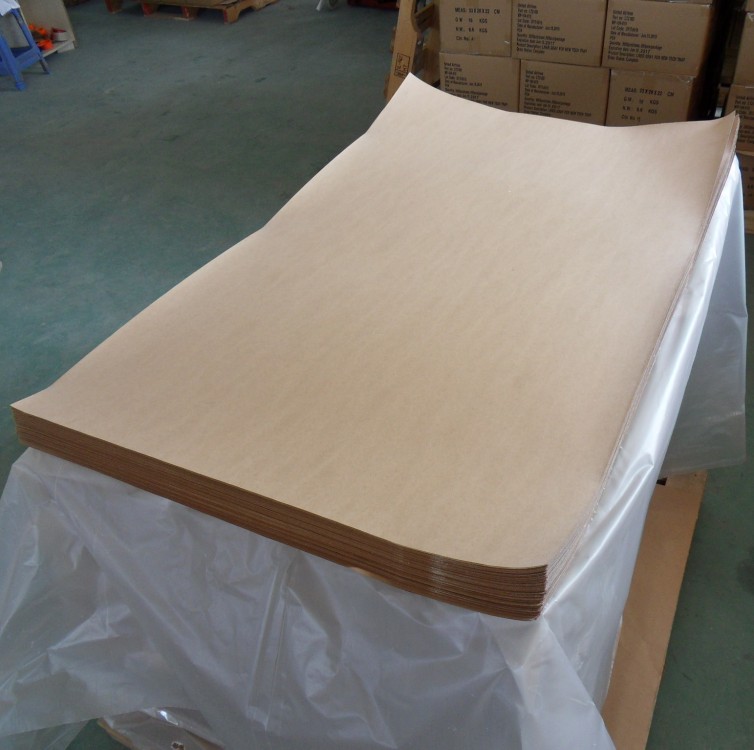
Is the cost of using pallet anti slip paper instead of stretch film decreasing or increasing?
Anti Slip Paper in automobile parts
A certain automobile parts manufacturing enterprise from Korea is one of the earliest pilot units to complete the replacement of anti-slip paper in the entire workshop. The logistics manager of the company calculated a detailed account:
Previously, in order to prevent metal stamping pallets from sliding during transportation, each pallet of goods had to be wrapped with more than 8 layers of stretch film, and the cost of consumables for a single pallet of wrapping film reached USD 0.4. In addition, the labor time required for workers to wrap the film, the comprehensive protection cost for a single pallet was close to USD 0.9.
After switching to pallet anti slip paper, only 4pcs USD 0.25 anti slip paper needs to be laid on each pallet, without the need for additional film reinforcement, and the comprehensive protection cost per pallet is directly reduced to USD 1.
Based on an annual shipment of 120000 pallets by the enterprise, only consumables and labor costs can save USD 36000 in one year. At the same time, the collapse and damage rate of goods during transportation has been reduced from 3.2% to 0.3%, resulting in an annual reduction of over USD 15000 in claims and rework costs.
Anti slip paper in warehousing and cold chain transportation
In the central kitchen of a large hamburger chain brand from America, the landing of pallet anti slip paper simultaneously solves the dual pain points of warehousing and cold chain transportation.
The company previously used wooden pallets with ordinary paper separators. In the humid environment of the cold chain warehouse, the paper is prone to slipping, and the maximum stacking capacity is only 3 layers, resulting in poor warehouse space utilization.
After replacing the food grade waterproof tray anti slip paper, the stacking safety height has been directly raised from the 3rd floor to the 5th floor, and the available storage capacity of the original constant temperature warehouse has increased by 67%. The construction of the 2000 square meter cold chain warehouse originally planned by the enterprise has been postponed, saving nearly USD 30million in site rental and renovation costs at once.
At the same time, there has been no sliding or tipping of bread and semi-finished food trays during cold chain transportation, and the damage rate of cold chain distribution has decreased from 2.1% to 0.2%, reducing food waste by more than 1.2 tons per month.
Anti slip paper in e-commerce
The cost reduction effect in the field of cross-border e-commerce is equally impressive. A certain home export enterprise from Malaysia has been purchasing high priced plastic sheets in order to meet the fumigation free requirements of European and American customers, with a single cost of up to USD 3. There is also a risk of plastic materials being seized by environmental inspections during customs clearance.
After switching to recyclable kraft paper anti slip paper that meets the ISPM15 standard, the cost per sheet is only USD 0.5, and it fully meets the export quarantine requirements.
With an annual export volume of 150000 pallets, the cost of pallet consumables alone is saved by USD 375,000.
More importantly, the ultra-thin thickness of the anti slip paper allows each standard container to fit an additional 1 rows of pallets, increasing the loading capacity of a single container from 42 pallets to 45 pallets. This directly reduces the unit logistics cost of a single cross-border sea shipment by 7%, saving over 3 million USD in shipping costs in one year.
Anti slip paper in environmental protection
It is worth noting that in this wave of industry popularization, the green compliance attributes of products have become a key driving force. The current mainstream tray anti slip paper uses over 95% recyclable wood pulp kraft paper as the base material, combined with environmentally friendly water-based anti slip coating, fully complying with food contact level environmental standards and international ISPM15 quarantine requirements.
It can be directly exported to global markets such as Europe, America, and Southeast Asia without additional fumigation treatment, completely solving the old problem of wooden packaging being detained during customs clearance. Many automotive parts, fresh food cold chain, and cross-border e-commerce companies have reported that after switching to the anti slip paper solution, not only has the amount of plastic consumables used in the packaging process decreased by 40%, but the export clearance efficiency has also increased by nearly 30%. At the same time, it can also meet the relevant assessment requirements of green supply chain and ESG carbon reduction for enterprises.
Future trend of logistic and packaging
Industry experts say that the current domestic modular logistics is in a critical stage of transitioning from "heavy pallets" to "lightweight". Pallet anti slip paper is not a single upgrade of packaging consumables, but a reconstruction of the protective logic of pallet transportation from the bottom. In the future, with the further maturity of customized technology, segmented products such as high friction, moisture-proof cold chain, and anti-static electronic products launched for different industries will further cover more special logistics scenarios, bringing more considerable comprehensive cost reduction space to the entire industry.